What Is Planetary Defense?
Planetary Defense as Disaster Risk Reduction
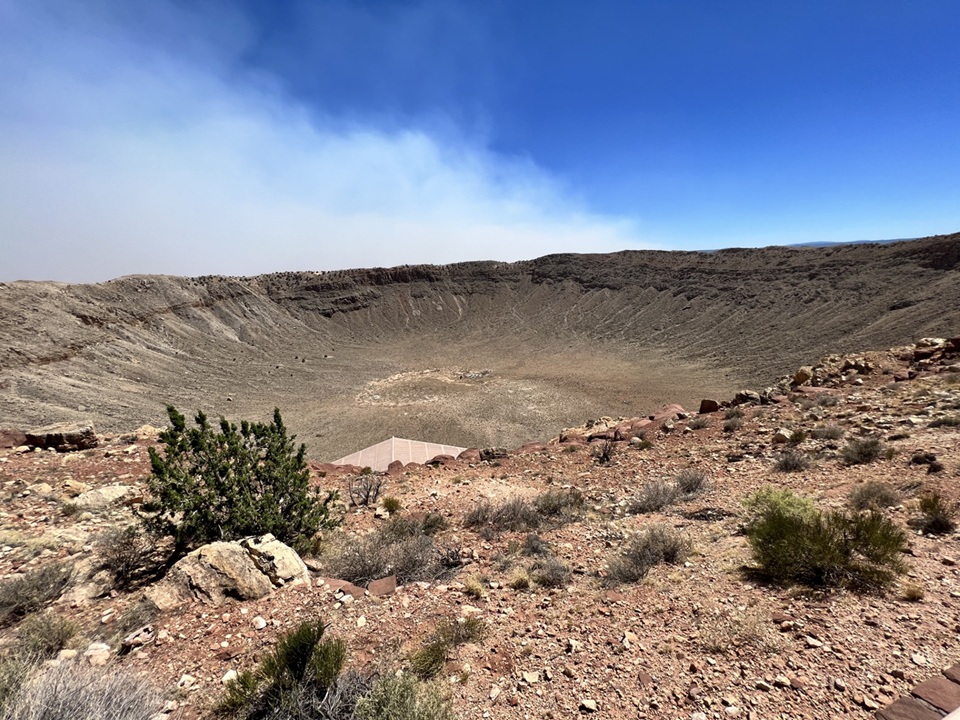
Planetary defense encompasses internationally coordinated efforts to prevent or minimize damage caused by impacts from asteroids, comets, and other near-Earth objects. Numerous small bodies have orbits that bring them close to Earth. Objects whose orbits bring them into the vicinity of Earth are classified as near-Earth objects (NEOs), and tens of thousands have been identified. Past events such as the 1908 Tunguska explosion and the 2013 Chelyabinsk meteor demonstrate that even relatively small objects can cause major regional damage. An impact by a larger object could have severe effects over a much wider area. Planetary defense addresses asteroid and comet impacts as predictable natural hazards and aims to protect lives, infrastructure, and communities through the successive stages of detection, monitoring, and mitigation. Advances in observation technology increasingly allow objects to be found before impact and their future approaches or possible collisions to be predicted.

Finding and Characterizing Near-Earth Objects
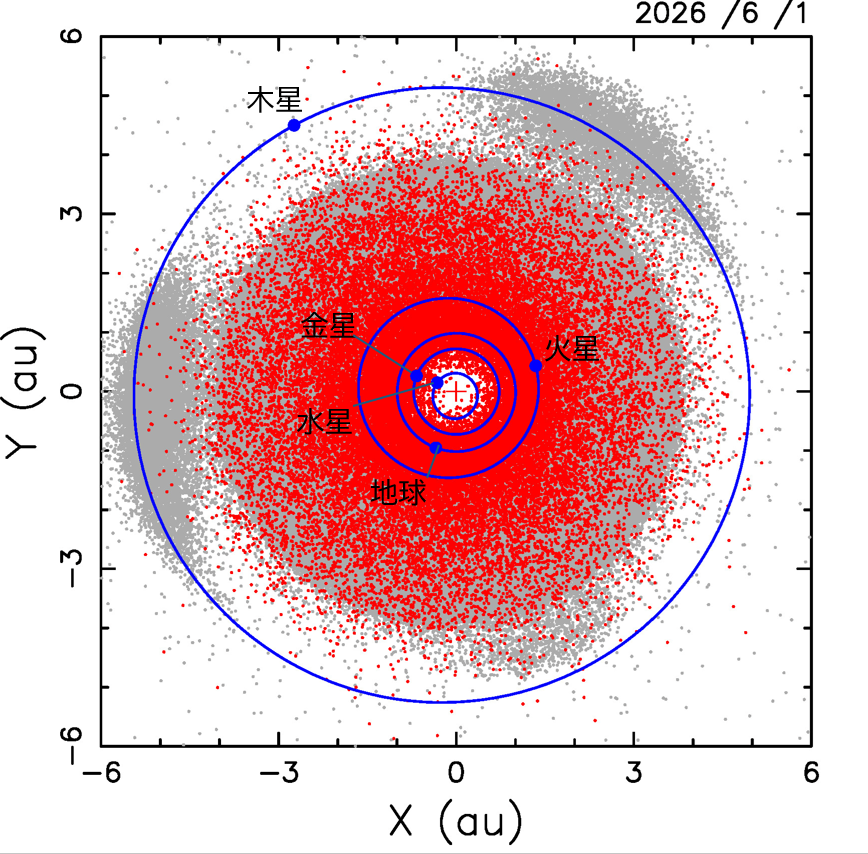
The first step in planetary defense is to discover objects that may approach Earth as early as possible and accurately determine their orbits and characteristics. Near-Earth objects are numerous, with about 42,000 discovered as of June 2026, but many smaller objects tens of meters across are still believed to remain undetected. Continuous observations with ground-based telescopes are essential for finding these objects. Asteroids are detected by analyzing images of the night sky and identifying objects moving among the stars. After discovery, observatories around the world cooperate on follow-up observations, allowing the object’s orbit to be determined with increasing precision. Japan has a long history of contributing to ground-based observations of near-Earth objects. Accurately understanding an object’s position and motion is essential not only for determining whether an impact will occur, but also for deciding what action should follow.
Ways to Prevent Impacts and Reduce Damage
If an object that could potentially strike Earth is discovered, the next question is how to respond. One technically demonstrated approach is the kinetic impactor method, in which a spacecraft collides with an asteroid to alter its orbit. In 2022, NASA’s DART spacecraft successfully changed the orbital period of Dimorphos by deliberately colliding with the asteroid. Other concepts under study include using a spacecraft’s gravitational attraction to gradually alter an asteroid’s orbit, as well as future technologies involving ion beams or nuclear energy. The effective approach depends on the object’s size and structure and the available warning time before a potential impact, so no single measure is suitable for every case. Planetary defense therefore extends beyond technology development. It is closely connected with international information sharing and disaster preparedness and mitigation in case an impact cannot be prevented.
Japan and JAXA’s Contributions to Planetary Defense
Japan has made important contributions to planetary defense through its asteroid exploration programs. The Hayabusa and Hayabusa2 missions have revealed the shapes, internal structures, and material properties of near-Earth asteroids in detail, providing vital knowledge for future impact mitigation. Plans are also underway under the extended Hayabusa2 mission for a close asteroid flyby and the exploration of a very small, rapidly rotating asteroid. These activities offer valuable opportunities to acquire planetary-defense-related technologies and understand objects in size ranges relevant to planetary defense. Japan has also built a strong record in ground-based observation and international network development and is expected to serve as a hub for cooperation in the Asia-Pacific region. In recent years, JAXA has established a dedicated framework for planetary defense and is strengthening its participation in and contributions to international discussions.
The Future of Planetary Defense in Japan
Asteroid Apophis is known to make an exceptionally close approach to Earth in 2029, attracting worldwide attention. Although there is no danger of impact, the object’s size and proximity make this an exceptionally close encounter for an asteroid of this size in the modern observational record and an excellent opportunity to deepen our understanding of planetary defense. Particularly in Europe and the United States, planetary defense is increasingly recognized as an important component of global disaster preparedness and international security, and policies, organizations, and international cooperation are advancing. A key challenge for Japan is to integrate planetary defense into national research, policy, and disaster-preparedness frameworks while drawing on its advanced exploration technologies and trusted international relationships. Preparing for risks from space is also a responsibility to future generations.