Hayabusa2 and Planetary Defense
The Hayabusa2 Extended Mission
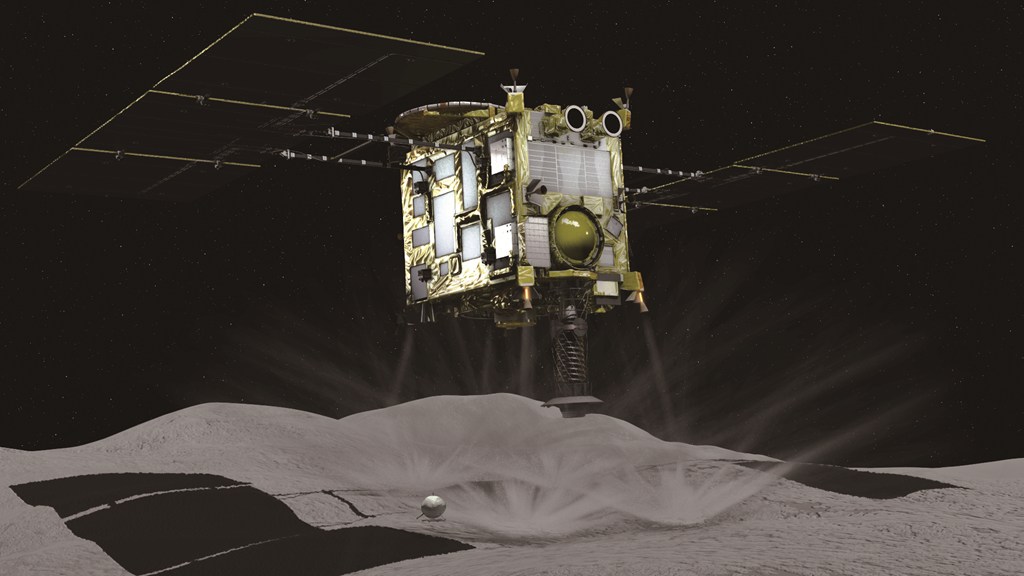
Launched in 2014, Hayabusa2 is a JAXA asteroid-exploration mission that returned samples from the near-Earth asteroid Ryugu. Its scientific results have provided important insights into asteroid composition and the formation of the solar system. The mission also contributes to research relevant to planetary defense. Accurately characterizing near-Earth objects (NEOs) provides the foundation for assessing risks and evaluating potential mitigation strategies if an object that could strike Earth is discovered in the future. These capabilities make Hayabusa2 an important source of scientific and technical knowledge for planetary defense.
Flyby Observation of Torifune
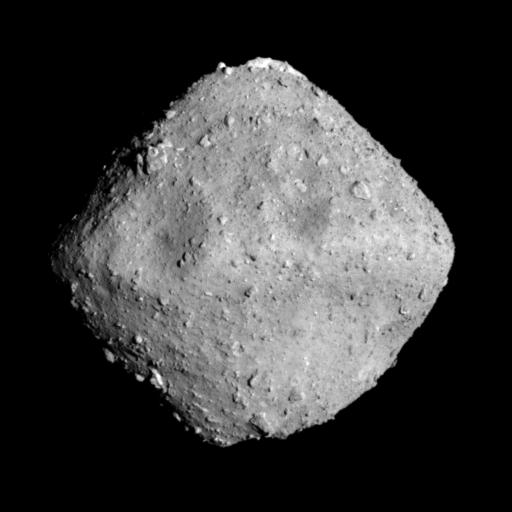
After completing its primary mission at Ryugu, Hayabusa2 began its extended mission. One of the major objectives of the extended mission is a flyby of asteroid Torifune. Torifune is a small near-Earth asteroid estimated to be several hundred meters in diameter. Asteroids in this size range are thought to be numerous, but many remain difficult to observe, and their detailed shapes and surface properties remain poorly understood. Using precise trajectory control, Hayabusa2 will pass Torifune at high speed and observe it with cameras and other instruments, obtaining close-range data that ground-based telescopes alone cannot provide. The Torifune encounter will offer a valuable opportunity to demonstrate trajectory-control techniques for retargeting an operating spacecraft to encounter an asteroid and conducting flyby observations. It is also expected to provide new information about the asteroid’s shape, structure, and composition.
Significance of the Torifune Flyby
Effective planetary defense requires advance planning for how to respond if an asteroid posing an impact threat to Earth is discovered. Essential information includes the object’s size, mass, rotation state, surface properties, and internal structure. A major objective of the Torifune flyby is to obtain this kind of information. Spacecraft operations during the encounter are also important for planetary defense. Close-range observations by Hayabusa2 can provide detailed data that cannot be obtained from ground-based telescopes alone. During the flyby, the spacecraft will be operated so that it passes as close to Torifune as mission constraints safely permit, requiring extremely precise navigation. The precision-navigation experience gained from the flyby may also inform future kinetic-impact missions designed to alter an asteroid’s trajectory, building on lessons from NASA’s Double Asteroid Redirection Test (DART). The Hayabusa2 flyby of Torifune therefore contributes to planetary defense through both asteroid characterization and the demonstration of precision flyby operations.